

Artificial intelligence (AI) is the capability of computational systems to perform tasks typically associated with human intelligence, such as learning, reasoning, problem-solving, perception, and decision-making. It is a field of research in engineering, mathematics, and computer science that develops and studies methods and software that enable machines to perceive their environment and use learning and intelligence to take actions that maximise their chances of achieving defined goals.[1]
High-profile applications of AI include advanced web search engines, chatbots, virtual assistants, autonomous vehicles, play and analysis in strategy games (e.g., chess and Go), and content generation (e.g. images, audio, and videos).
The traditional goals of AI research include learning, reasoning, knowledge representation, planning, natural language processing, and perception, as well as support for robotics.[a] To reach these goals, AI researchers use techniques including state space search and mathematical optimisation, formal logic, artificial neural networks, and methods based on statistics, operations research, and economics.[b] AI also draws upon psychology, linguistics, philosophy, neuroscience, and other fields.[2] Some companies, such as OpenAI, Google DeepMind, and Meta, aim to create artificial general intelligence (AGI)—AI that can complete nearly any cognitive task at least as well as a human.[3]
Artificial intelligence was founded as an academic discipline in 1956.[4] The field went through multiple cycles of optimism throughout its history,[5][6] followed by periods of disappointment and loss of funding, known as AI winters.[7][8] Funding and interest increased substantially after 2012, when graphics processing units (GPUs) started being used to accelerate neural networks, and deep learning outperformed previous AI techniques.[9] This growth accelerated further after 2017 with the transformer architecture.[10] In the 2020s, an AI boom coincided with advances in generative AI, which became widespread and allowed for the creation and modification of media. In addition to AI safety and unintended consequences and harms from the use of AI, ethical concerns, AI’s long-term effects, environmental effects,[11] and potential existential risks have prompted discussions of AI regulation.
Goals
The general problem of simulating (or creating) intelligence has been broken down into subproblems. These consist of specific traits or capabilities that researchers expect an intelligent system to display. The traits described below have received the most attention and cover the scope of AI research.[a]
Reasoning and problem-solving
Early researchers developed algorithms that imitated step-by-step reasoning that humans use when solving puzzles or making logical deductions.[12] By the late 1980s and 1990s, methods were developed for dealing with uncertain or incomplete information, employing concepts from probability and economics.[13]
Many of these algorithms were insufficient for solving large reasoning problems because they experienced a “combinatorial explosion”, meaning they become exponentially slower as the problems grow.[14] Even humans rarely use the step-by-step deduction that early AI research could model. Humans solve most of their problems using fast, intuitive judgments.[15]
Reasoning models, a type of large language model (LLM) trained to generate intermediate chains-of-thought, emerged in 2024 and allowed improved performance on complex problems in mathematics and coding.[16] These models can produce incorrect outputs or “hallucinations,” unlike symbolic reasoning systems.[17]
“Unlock new possibilities with Artificial Intelligence. 🤖✨”
Knowledge representation
AI programs use knowledge to answer questions intelligently and make deductions about real-world facts.
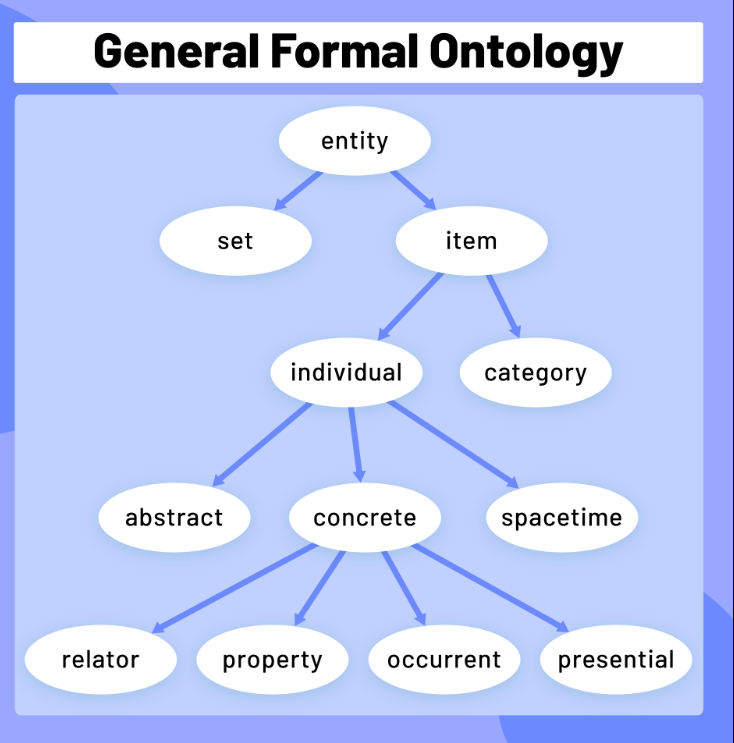
Formal knowledge representation and knowledge engineering use symbols to represent words, concepts and things in the world.[18][c] A knowledge base is a body of knowledge represented in a form that can be used by a program. An ontology is the set of objects, relations, concepts, and properties used by a particular domain of knowledge.[24] Formal knowledge has been studied extensively since the 1970s and researchers have developed formalisms for a wide variety of difficult domains.[d]
The symbolic approach has difficulty with several problems: the breadth of commonsense knowledge (the set of atomic facts the average person knows is enormous),[30] the sub-symbolic form of most commonsense knowledge (much of what people know is not represented as “facts” or “statements” they can express verbally),[15] and knowledge acquisition (the problem of obtaining knowledge for AI applications).[e]
Large language models (and some other AI programs developed since 2012) do not require explicit, symbolic knowledge. They acquire knowledge by being trained on the combined text of millions of books and billions of websites. Modern AI can also learn about a domain by running experiments (as when AlphaZero learns game strategy by playing against itself). Machine learning solves the problems of general knowledge, commonsense knowledge and knowledge acquisition, however this approach has struggled with accurate recall and valid reasoning.[citation needed]
Planning and decision-making
An “agent” is any entity (artificial or not) that perceives and takes actions in the world. A rational agent has goals or preferences and takes actions to make them happen.[f][33] In automated planning, the agent has a specific goal.[34] In automated decision-making, the agent has preferences—there are some situations it would prefer to be in, and some situations it is trying to avoid. The decision-making agent assigns a number to each situation (called its “utility“) that measures how much the agent prefers it. For each possible action, it can calculate the “expected utility“: the utility of all possible outcomes of the action, weighted by the probability that the outcome will occur. It can then choose the action with the maximum expected utility.[35]
In classical planning, the agent knows exactly what the effect of any action will be.[36] In most real-world problems, however, the agent may not be certain about the situation it is in (it is “unknown” or “unobservable”) and it may not know for certain what will happen after each possible action (it is not “deterministic”). It must choose an action by making a probabilistic guess and then reassess the situation to see if the action worked.[37]
Alongside thorough testing and improvement based on previous decisions, having an explanation for why the agent took certain decisions is a way to build trust, especially when the decisions have to be relied upon.[38]
In some problems, the agent’s preferences may be uncertain, especially if there are other agents or humans involved. These preferences may be learned (e.g., with inverse reinforcement learning), or the agent can seek information to improve them.[39] Information value theory can be used to weigh the value of exploratory or experimental actions.[40] The space of possible future actions and situations is typically intractably large, so the agents must take actions and evaluate situations while being uncertain of the outcome.
A Markov decision process has a transition model that describes the probability that a particular action will change the state in a particular way and a reward function that supplies the utility of each state and the cost of each action. A policy associates a decision with each possible state. The policy could be calculated (e.g., by policy iteration), determined by a heuristic, or learned.[41]
Game theory describes the rational behaviour of multiple interacting agents and is used in AI programs that make decisions involving other agents.[42]